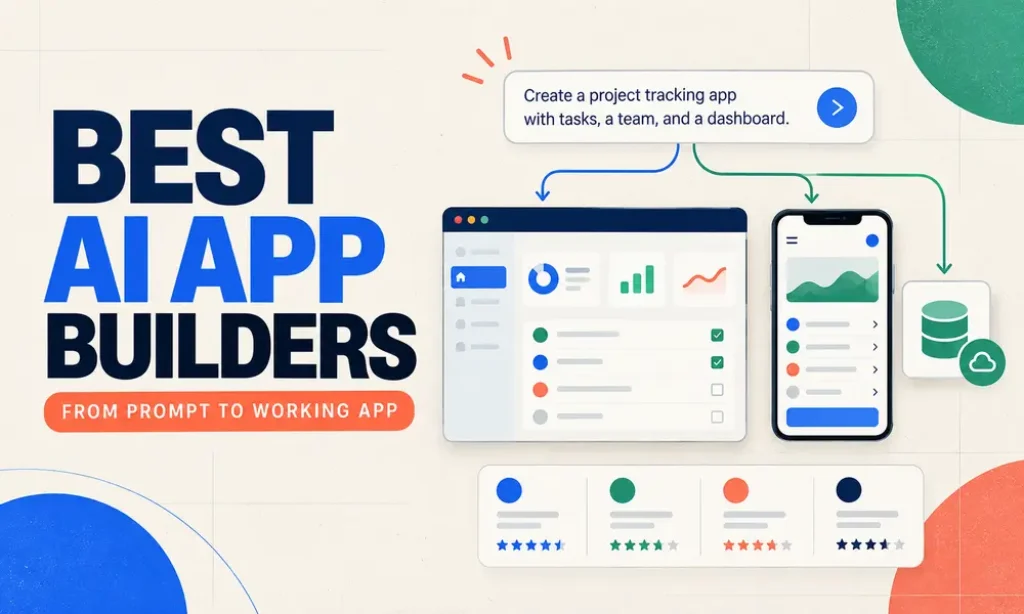

An AI app builder turns a plain-English description into a working web or mobile app, with screens, a database, user logins and hosting set up for you. In 2026 the best AI app builders can take a founder from idea to a live link in an afternoon, but they differ a lot on what they build, what they cost once the free credits run out, and how easily you can take your code elsewhere.
This guide compares the four AI app builders most people already know (Lovable, Bolt, Replit and Base44) with five underrated and newer AI app builders that deserve more attention. These are Rocket.new, Emergent, Rork, and Google AI Studio.
Which AI App Builder Is Best?
Lovable is the best AI app builder for most non-technical founders, because it builds full-stack web apps with logins and a database, and lets you export the code. Bolt has the most generous free plan. Replit suits people who want to learn while they build. Base44 is the cheapest paid AI app builder. For native iPhone and Android apps, Rork is the stronger choice.
Best AI App Builders at a Glance
| AI app builder | Best for | Builds | Free plan | Code export |
|---|---|---|---|---|
| Lovable | Non-technical founders building a full web app | Web apps | 5 credits a day (up to 30 a month) | Yes, via GitHub |
| Bolt | Fast prototypes and the most free usage | Web apps | 1M tokens a month (300K a day) | Yes |
| Replit | Learning to code while building | Web apps, full IDE | Daily Agent credits | Yes |
| Base44 | Simple business apps on a budget | Web apps | 25 message credits a month | Limited |
| Rocket.new | Web and mobile apps from one tool, built in India | Web and mobile | 20 one-time credits | Yes |
| Emergent | Web and mobile from one prompt, with multiple AI agents | Web and mobile (Expo) | 10 credits a month | Yes |
| Rork | Native iPhone and Android apps | Mobile apps | Yes, limited | Yes, on Pro |
| Google AI Studio | Free full-stack prototypes | Web and Android | Free, with limited deployments | Yes |
AI App Builder Pricing Compared
| AI app builder | Entry paid plan | What you get | Next tier | How usage is metered |
|---|---|---|---|---|
| Lovable | Pro: $25/month ($21 billed annually) | 100 monthly credits plus 5 daily credits | Business: $50/month | Credits per AI action |
| Bolt | Pro: $25/month | 10M tokens a month, no daily cap | Teams: $30 per member/month | Tokens |
| Replit | Core: $20/month ($18 billed annually) | $20 of usage credits a month | Pro: $100/month ($90 annually) | Effort-based credits |
| Base44 | Builder: $20/month ($16 billed annually) | 100 message credits a month | Builder: $50/month ($40 annually) | Message and integration credits |
| Rocket.new | Pro: $25/month | 100 credits a month | Rocket: $50/month (250 credits) | Credits |
| Emergent | Standard: $20/month | 100 credits a month | Pro: $200/month (750 credits) | Agent credits |
| Rork | From $25/month | 100 messages a month | $50/month (250 messages); Rork Max from $200 | Messages |
| Google AI Studio | $0 | Free app building with limited deployments | Google Cloud billing as you scale | Cloud usage |
Prices are in US dollars and exclude tax. The plan price is rarely the whole bill for an AI app builder: most charge per AI action, so a project that needs lots of fixes costs more than one that works on the first try.
The Best-Known AI App Builders
1. Lovable: Best AI App Builder for Non-Technical Founders
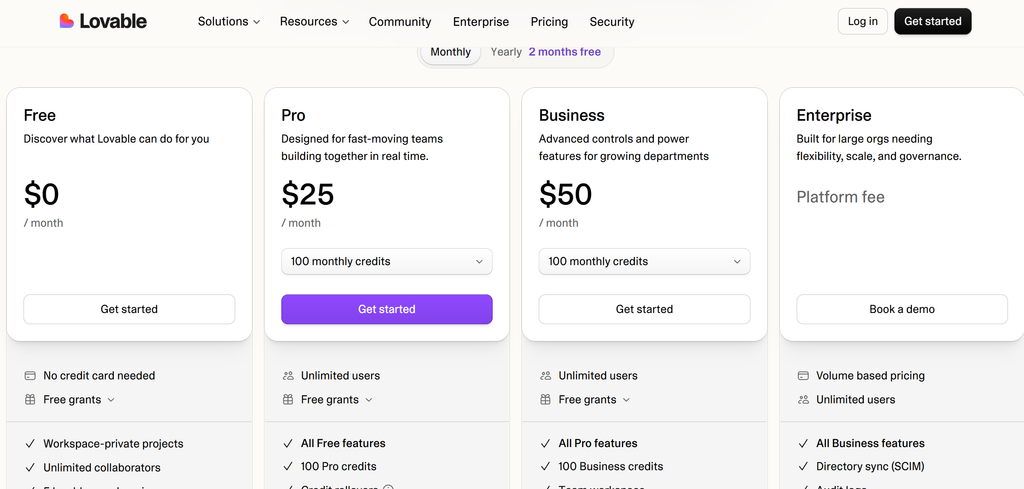
Lovable is the AI app builder most people try first, and for good reason. You describe the product in a chat, and Lovable builds a full-stack web app with a working front end, database, user logins and hosting. Its backend runs on Supabase, so the app has a real database rather than a mock-up, and you can sync the code to GitHub and move it elsewhere later. Our Supabase pricing guide explains what that backend costs as your app grows.
The free plan gives 5 credits a day, capped at 30 a month, which is enough to see whether your idea works. Pro costs $25 a month for 100 credits plus the daily bonus, and adds custom domains and badge removal. Credits are spent per request, so a session spent asking the AI to fix its own bugs uses up a plan faster than reviews suggest. Lovable raised $400 million at a $13.3 billion valuation in August 2026, so it isn’t going anywhere soon.
2. Bolt: Best AI App Builder for Fast Prototypes and Free Use
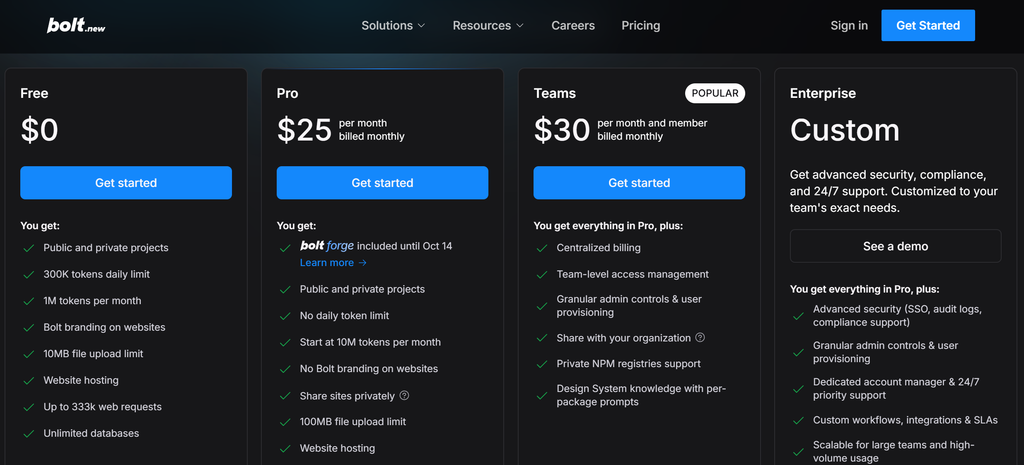
Bolt, from StackBlitz, builds and runs full-stack apps entirely in the browser, with nothing to install. It’s the fastest way to get a clickable prototype in front of someone, and its free plan is the most generous of the major AI app builders. Free users get 1 million tokens a month, with a 300K daily cap, plus hosting and unlimited databases.
Pro costs $25 a month for 10 million tokens with no daily limit, and paid tokens roll over for a month. The catch is that Bolt bills by tokens, and tokens scale with the size of your project. As an app grows, each change reads more code, so the same 10 million tokens go less far on a mature project than on a new one.
3. Replit: Best AI App Builder for Learning While You Build
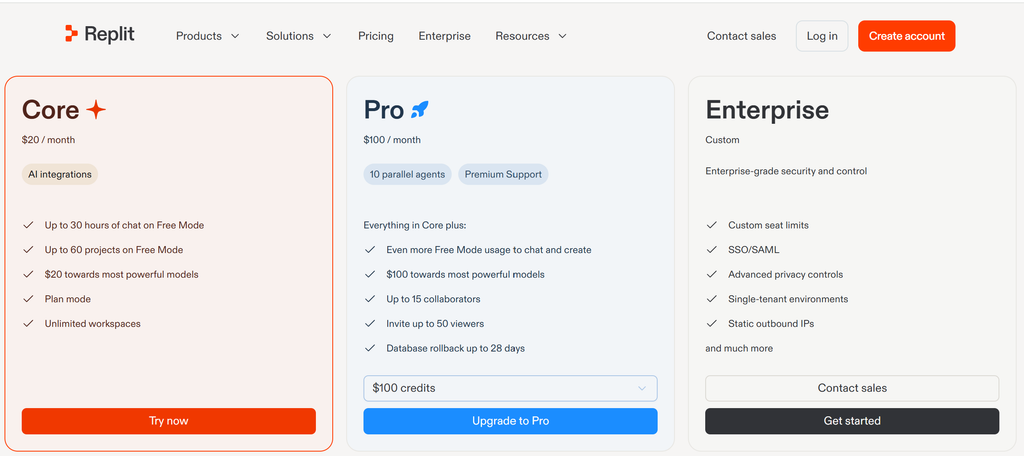
Replit sits between an AI app builder and a full coding environment. Its Agent builds the app from a prompt, but you can see and edit every file, which makes it the best choice if you want to understand what the AI is doing. Replit also supports many programming languages, not just the JavaScript most AI app builders use.
Replit cut Core to $20 a month ($18 billed annually) in 2026, and the plan includes $20 of usage credits. Agent work is billed by effort, so complex tasks cost more than simple ones, and active builders often top up. Replit’s Free Mode, launched in August 2026, gives every plan some no-cost Agent usage. If you’re choosing between the two most popular options, our Replit vs Lovable comparison goes deeper.
4. Base44: The Cheapest Paid AI App Builder for Simple Business Apps
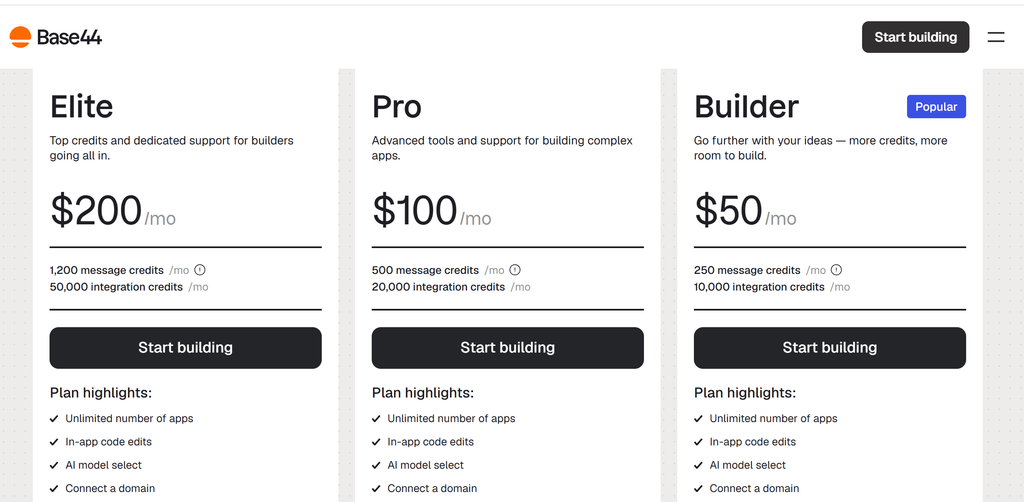
Base44, now owned by Wix, is built for people who want the fewest decisions. It handles the database, logins and hosting itself, and it’s good at internal tools, booking apps, simple dashboards and client portals. Its Starter plan is the cheapest paid entry among the major AI app builders, at $16 a month billed annually ($20 month to month).
The free plan is tight at 25 message credits a month, though it lets you create up to five apps. Base44 also has a separate pool of integration credits that your live app uses when it calls AI or other services, so busy apps can run out even if you’re not editing them. It’s less suited to developers who want full control of the code.
Underrated and New AI App Builders Worth Trying
These AI app builders get far less attention than Lovable or Bolt, but each one solves a specific problem the big four handle less well.
5. Rocket.new: An India-Built AI App Builder for Web and Mobile
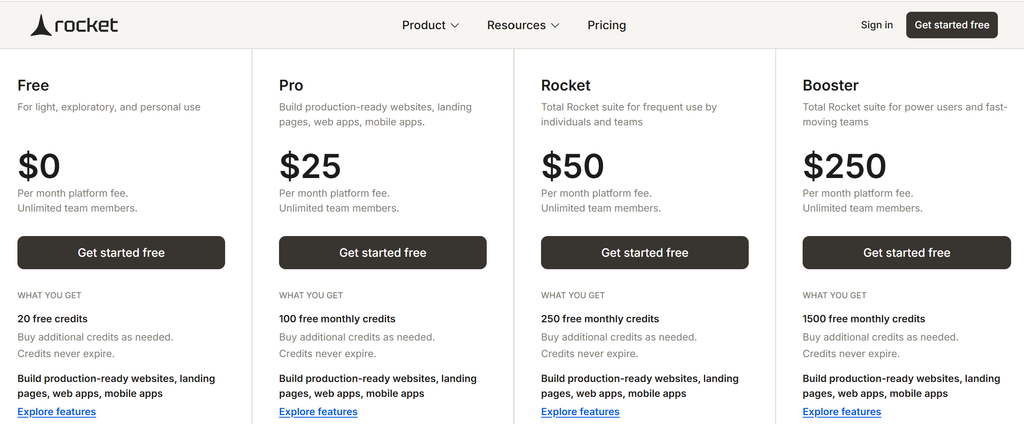
Rocket.new is headquartered in Surat, India, with operations in Palo Alto, and is backed by Salesforce Ventures and Accel. It builds both web and mobile apps from one workspace, which most web-only AI app builders can’t. It also adds a research step that looks at the market before building, plus monitoring once the app is live.
The free plan includes 20 one-time credits. Pro costs $25 a month for 100 credits, and the Rocket plan at $50 a month adds 250 credits and its fuller research tools. For Indian founders building for local users, it’s worth trying alongside Lovable.
6. Emergent: A Multi-Agent AI App Builder for Web and Mobile
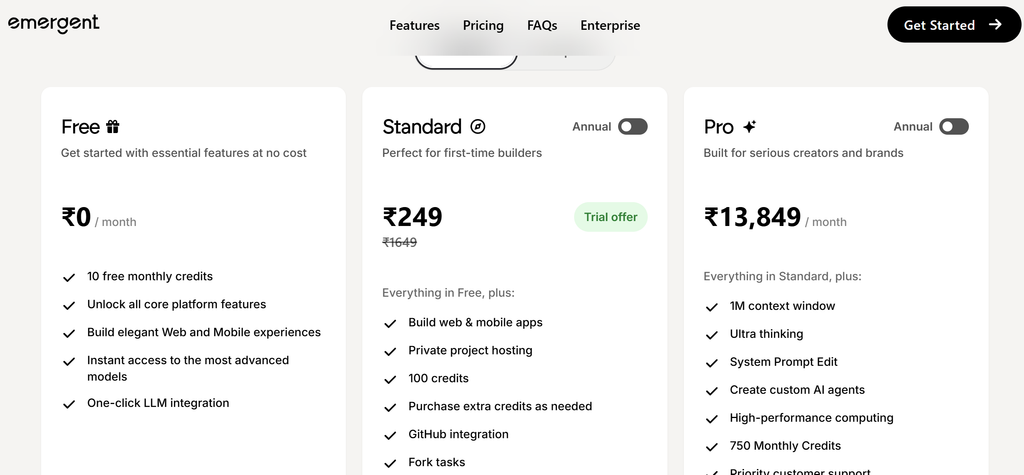
Emergent uses a team of AI agents that plan, design, write, test and connect integrations in parallel, rather than one model doing everything. It builds web apps and mobile apps (using Expo and React Native) from the same prompt, with Stripe, logins and hosting wired in.
The free plan is the tightest here at 10 credits a month, and independent reviews note that a fully featured app can use most of that in one build. Standard costs $20 a month for 100 credits, and Pro jumps to $200 a month for 750 credits and a larger context window. Credit use is the most common complaint in user reviews, so watch the meter on bigger projects.
7. Rork: The AI App Builder for Native iPhone and Android Apps
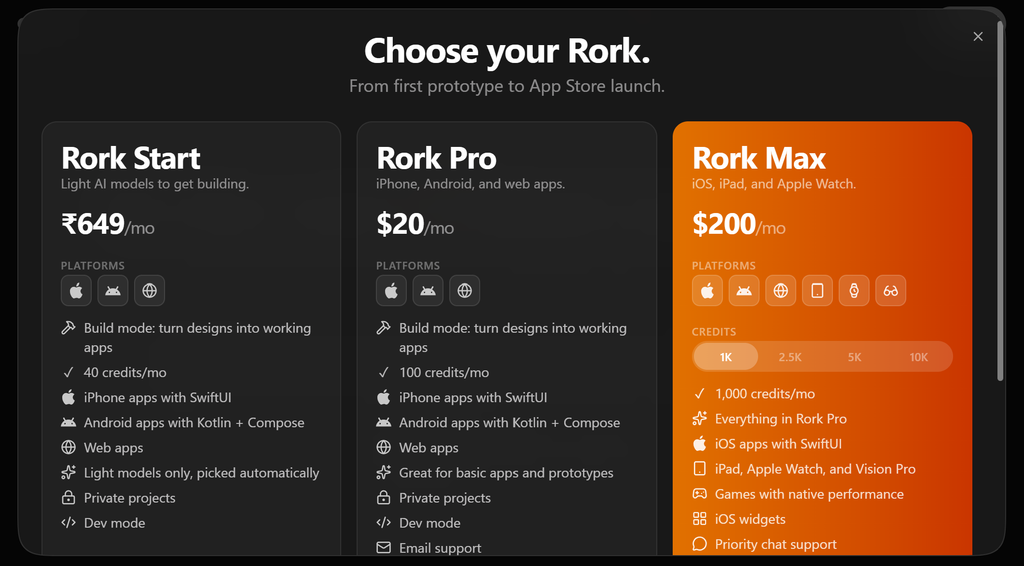
Most AI app builders make web apps, and getting those into the App Store takes extra work. Rork is built for mobile from the start. It generates iOS and Android apps you can test on your own phone and publish to the App Store and Google Play from inside the tool.
Paid plans start at $25 a month for 100 messages, or $50 for 250. Rork Max, launched in February 2026 for native SwiftUI apps aimed at Apple devices, starts at $200 a month. If your product only makes sense as a phone app, Rork saves the conversion step that web-first AI app builders need.
8. Google AI Studio: The Free AI App Builder Most People Overlook
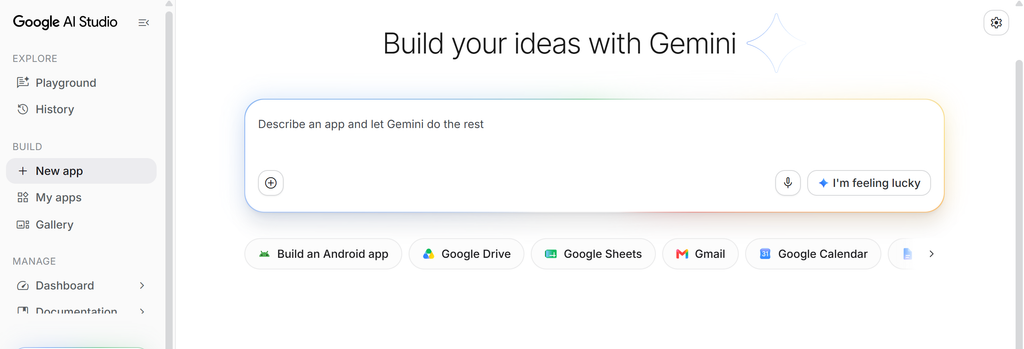
Google AI Studio is better known as a place to test Gemini models, but its app-building mode turns a prompt into a working full-stack web or Android app. It’s one of the few genuinely free ways to build an app with AI, and eligible builders can deploy a couple of apps without adding a billing account. Costs only start once your app needs Google Cloud resources at scale.
It’s less polished than Lovable for non-technical users, and the Gemini models drive everything. If you already use Gemini, our ChatGPT vs Gemini comparison explains Google’s paid plans and where they help.
Is There a Free AI App Builder?
Yes. Bolt, Lovable, Replit, Base44, Rocket.new, Emergent and Rork all have free plans, and Google AI Studio is free to build with. Bolt’s free plan gives the most usage among the major tools, with 1 million tokens a month. Google AI Studio is the most genuinely free AI app builder, since you can build and deploy without paying until your app scales. Free plans usually add the builder’s branding and limit custom domains.
Can ChatGPT Build Me an App?
ChatGPT, Gemini and Claude can write the code for an app and explain how to run it, but they don’t host the app, set up its database or publish it. A dedicated AI app builder does all of that for you. Developers who are comfortable with code can also use AI coding tools such as Claude Code or Cursor, which work on a real codebase on your computer. Our Claude Code vs Cursor guide compares them, and ChatGPT users should know that OpenAI’s Codex agent now comes with every ChatGPT plan, as covered in our guide on whether ChatGPT Plus is worth it.
Where AI App Builder Costs Climb
Nearly every AI app builder now charges per AI action rather than a flat fee, and that’s where most surprise bills come from. Three things drive the cost up.
The first is fix loops. When the AI breaks something and you ask it to fix it, each attempt uses credits. Clear, specific prompts and smaller changes keep this down.
The second is project size. Token-based builders like Bolt read more code with every change as your app grows, so the same allowance covers fewer edits later on.
The third is the live app’s own usage. Some AI app builders, including Base44 and Replit, charge for hosting, database activity or AI features your users trigger, separately from your building. A popular app can cost more than the subscription.
Before upgrading, check whether the tool lets you export your code. If it does, you can move to cheaper hosting once the app is built, and use the AI app builder only when you need changes.
How to Choose an AI App Builder for Your Project
If you’re a non-technical founder building a web product with user accounts, start with Lovable, and compare Rocket.new if you also need a mobile app.
If you mainly want to test an idea quickly and cheaply, use Bolt’s free plan.
If you want to learn to code as you build, choose Replit.
If you need a simple internal tool or client portal on the smallest budget, Base44’s Starter plan is the cheapest way in.
If your app has to live in the App Store, Rork is built for that job.
If you want to spend nothing at all while you experiment, try Google AI Studio.
If you’re a developer who’d rather keep full control of the code, an AI coding tool may suit you better than an AI app builder. Our Cursor alternatives guide covers the options.