Quick Answer
Splashtop is the best AnyDesk alternative for most people who want affordable remote access. Its Solo plan starts at $6/month when billed annually, making it considerably cheaper than AnyDesk’s current Solo plan at $28.90/month equivalent.
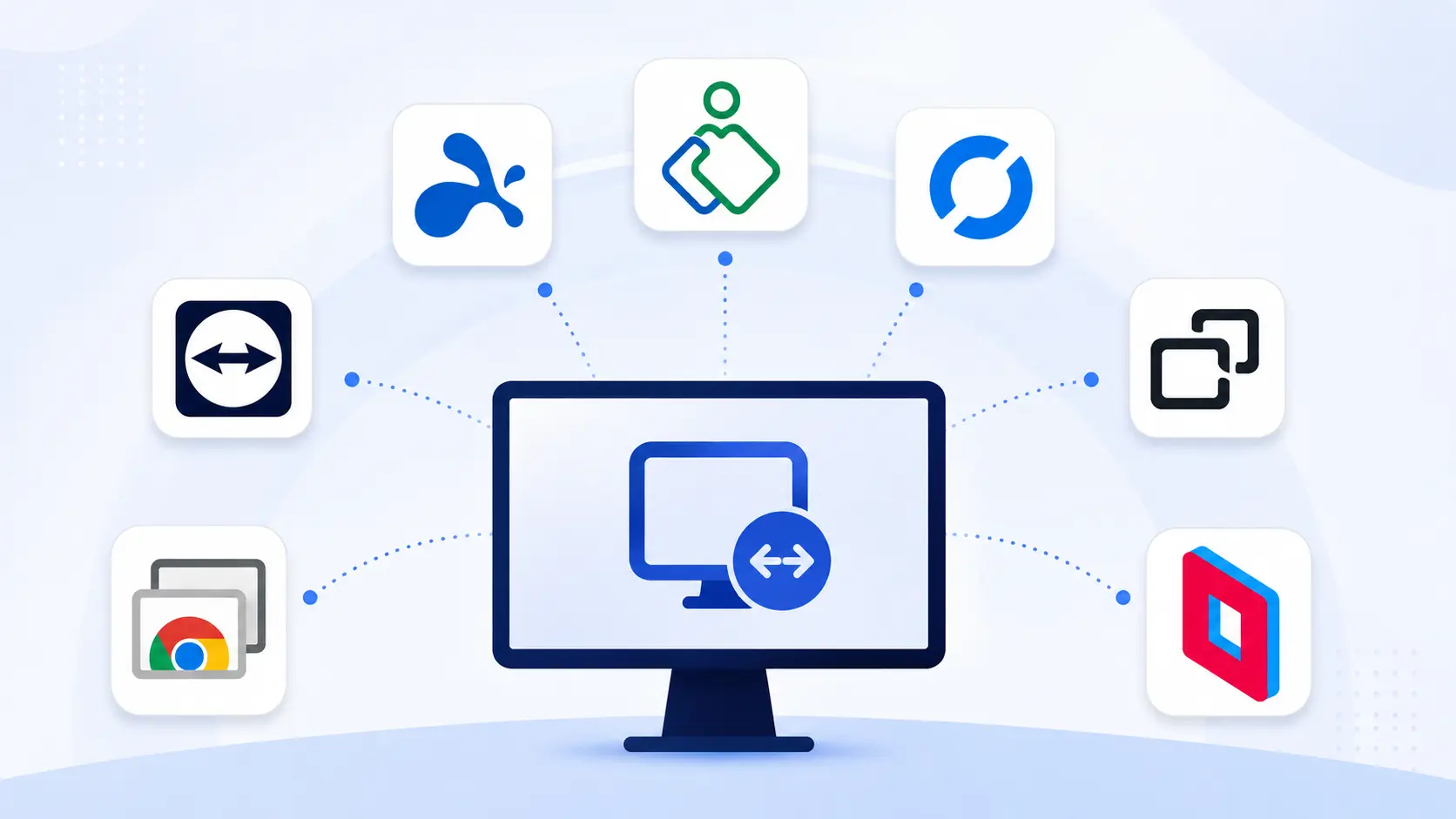
For IT support teams, Zoho Assist is worth a look because it offers a free tier and dedicated remote-support features. RustDesk is the better choice if self-hosting and infrastructure control matter most. ConnectWise ScreenConnect is designed more around MSP and support workflows, while Chrome Remote Desktop is the simplest free option for occasional personal access.
TeamViewer remains a strong choice for organizations that want a mature remote-support platform and broader enterprise capabilities. And if you’re using remote desktop for gaming, video production, or other GPU-heavy work, Parsec is a better fit than traditional IT-focused tools.
Best AnyDesk Alternatives at a Glance
| Alternative | Best for | Starting price | Main advantage | Main limitation |
| Splashtop | Affordable remote access | $6/mo | Low starting price | No permanent free plan |
| Zoho Assist | Small IT support teams | Free | Free tier and support features | Less enterprise-focused |
| RustDesk | Self-hosting | Free | Open source and infrastructure control | Requires technical setup |
| ConnectWise ScreenConnect | MSPs | Check current pricing | Strong support workflows | More than casual users need |
| TeamViewer | Enterprise teams | $50.90/mo for Business | Mature platform and broad capabilities | Can become expensive |
| Chrome Remote Desktop | Personal use | Free | Simple and free | Very few IT management features |
| Parsec | Gaming and creative work | Free | Low-latency remote streaming | Not designed for IT support |
Prices are published US rates where available and may vary by region, taxes, billing term, product configuration, and promotions.
Why Look for an AnyDesk Alternative?
AnyDesk remains a capable remote desktop platform, but its current pricing and licensing structure may not work for every user.
Its current business plans include Solo at $28.90/month equivalent, Standard at $49.90/month, and Advanced at $111.90/month, all billed annually. Standard starts with one concurrent connection, while Advanced starts with two. That makes it worth comparing alternatives before committing, particularly if you’re a small business or only need basic remote access.
Here are the main reasons buyers consider switching:
- Lower cost: Some alternatives start considerably below AnyDesk’s current Solo price.
- Free options: Chrome Remote Desktop and RustDesk can cover basic use without a recurring software license.
- Different licensing models: Some tools price by user, technician, device, or concurrent session.
- Self-hosting: RustDesk gives technically capable teams more control over their infrastructure.
- IT support features: Products such as Zoho Assist and ScreenConnect are built around support workflows rather than simple remote access.
- Specialized performance: Parsec is better suited to workloads where responsiveness and graphics performance matter more than traditional IT management features.
How We Evaluated These AnyDesk Alternatives
We compared these tools based on the things that usually matter when replacing a remote desktop platform: price, remote access, unattended access, attended support, device management, file transfer, session features, self-hosting, ease of setup, and the type of user each product is designed for.
Pricing was checked against publicly available provider information where possible. Because remote-access software changes plans and prices regularly, treat the figures below as a snapshot rather than a permanent price list.
7 Best AnyDesk Alternatives in 2026
1. Splashtop — Best Affordable AnyDesk Alternative for Remote Access
Best for: Individuals and small teams that mainly need reliable access to their own computers.
Splashtop is probably the most straightforward AnyDesk replacement if price is your main reason for switching. Its current Remote Access lineup starts with Solo at $6/month billed annually, followed by Pro at $8.25/month per user and Performance at $13/month per user. Solo is designed for individual users, while Pro adds features such as multi-monitor support, user management, and session recording. Performance is aimed at more demanding workloads.
Splashtop also recently simplified its product naming, moving Business Access under the Remote Access name. The main catch is that Splashtop separates remote access from remote support. If you’re helping customers or troubleshooting other people’s computers, you’ll need to look at its Remote Support products rather than simply choosing Remote Access.
Why choose it: It’s one of the easiest ways to cut remote-access costs without moving to a bare-bones free tool.
Not ideal for: Teams looking for a single platform covering every type of remote-support workflow.
2. Zoho Assist — Best AnyDesk Alternative for Small IT Support Teams
Best for: Small IT teams, help desks, and businesses already using Zoho products.
Zoho Assist is more support-oriented than a basic remote-access tool. It supports both attended and unattended remote access and fits naturally into businesses already using the broader Zoho ecosystem. Its biggest advantage for smaller teams is the availability of a free plan, giving users a way to test the product without immediately committing to a paid subscription.
For businesses already using Zoho Desk, CRM, or other Zoho products, that wider ecosystem can also make Zoho Assist easier to fit into an existing workflow.
The trade-off is that organizations looking for the deepest enterprise management and reporting capabilities may find products such as TeamViewer or other enterprise-focused platforms more suitable.
Why choose it: You want a real remote-support product without paying from day one.
Not ideal for: Large IT departments that need highly advanced enterprise administration.
Also read: Best Cursor Alternatives in 2026: AI Coding Tools Compared
3. RustDesk — Best Open-Source AnyDesk Alternative for Self-Hosting
Best for: Businesses and technical users that want to control their own remote-access infrastructure.
RustDesk takes a very different approach from AnyDesk. Instead of relying entirely on a vendor-managed cloud service, RustDesk is an open-source remote desktop platform that can be deployed using your own infrastructure. That makes it particularly interesting for organizations with strict internal requirements around infrastructure ownership or data control.
The biggest advantage is also the biggest drawback: you are responsible for the infrastructure.
Someone has to deploy, secure, monitor, update, and troubleshoot the server. That’s a very different experience from signing up for AnyDesk and letting the vendor handle the backend.
For a technically capable team, however, that trade-off can be worthwhile.
Why choose it: You want self-hosting and more control over the infrastructure.
Not ideal for: Users who want a completely managed service with minimal technical maintenance.
4. ConnectWise ScreenConnect — Best AnyDesk Alternative for MSPs
Best for: Managed service providers and professional IT support teams.
ScreenConnect is less about casual remote access and more about running remote support as a business operation. That’s why it makes more sense for MSPs than for someone who simply wants to access a home PC. Its feature set is built around support sessions, managing client environments, and handling remote troubleshooting at scale.
This distinction matters when comparing it with AnyDesk. If you only need to connect to your own machines, ScreenConnect can feel like overkill. If you’re an MSP managing remote support for multiple customers, its workflow is much closer to what you actually need.
Why choose it: Your business revolves around remote IT support rather than occasional remote access.
Not ideal for: Personal users or very small teams looking for the simplest possible remote desktop tool.
Also read: Best Website Builders in 2026: 12 Options Compared
5. TeamViewer — Best AnyDesk Alternative for Enterprise Features
Best for: Businesses that prioritize a mature remote-support platform and broader enterprise capabilities.
TeamViewer is one of the most established names in remote access, and it’s a natural AnyDesk alternative for organizations that want more than basic desktop control. Its current lineup covers individual, team, and enterprise use cases, with products and add-ons for remote support, remote management, enterprise integrations, security, and device management.
For its Business license, the current US pricing shown by TeamViewer is $50.90/month, with one user, one concurrent connection, and up to 200 managed devices. Premium is listed at $120.90/month and Corporate at $245.90/month in the current quotation flow.
That’s not cheap, particularly compared with Splashtop. But TeamViewer’s appeal isn’t really about being the lowest-cost option. It’s a better fit when you need a mature platform with a broad feature set and room to expand.
Why choose it: Enterprise features and a mature remote-support ecosystem matter more than the lowest price.
Not ideal for: Small teams whose main priority is minimizing software costs.
6. Chrome Remote Desktop — Best Free AnyDesk Alternative for Personal Use
Best for: Personal remote access and occasional help for family or friends.
If you don’t need an IT help desk, device management, reporting, or advanced support features, Chrome Remote Desktop is hard to ignore. It’s free and works well for straightforward remote access between computers. There’s no complicated pricing table and no paid tier to work your way through.
The limitations become obvious when you move into business use. There’s no full-featured IT management console comparable to dedicated remote-support platforms, and it isn’t designed for organizations managing large numbers of endpoints.
For personal use, though, that simplicity is the point.
Why choose it: You need basic remote access and don’t want another subscription.
Not ideal for: Businesses managing a fleet of devices or providing professional remote support.
7. Parsec — Best AnyDesk Alternative for Gaming and Creative Work
Best for: Gamers, video editors, designers, and other users who care about responsive remote graphics.
Parsec isn’t really a direct replacement for AnyDesk’s IT support feature set. It’s better thought of as a high-performance remote streaming platform.
That’s why it’s particularly interesting for gaming and creative workflows. When you’re remotely controlling a powerful desktop for video editing, 3D work, design, or gaming, responsiveness and image quality can matter more than features such as help-desk reporting.
Parsec’s focus on low-latency streaming and hardware-accelerated performance makes it a better fit for those workloads than traditional business remote-support software. It does, however, lack many of the features you’d expect from an IT support platform.
Why choose it: Your remote session needs to feel responsive for gaming or graphics-heavy work.
Not ideal for: Help desks and IT teams that need centralized endpoint management.
Which AnyDesk Alternative Is Best for You?
The best AnyDesk alternative depends more on what you’re doing with the software than on the feature checklist.
Best AnyDesk Alternative for Small Businesses
Choose Splashtop– It offers a low entry price and covers the core remote-access features most small businesses need. Its Solo plan starts at $6/month when billed annually.
Best Free Alternative to AnyDesk
Choose Chrome Remote Desktop for basic personal access or Zoho Assist for remote support– Chrome Remote Desktop keeps things extremely simple, while Zoho Assist makes more sense if you need actual support-team functionality.
Best Open-Source AnyDesk Alternative
Choose RustDesk– It’s the standout option if self-hosting and infrastructure control are more important to you than having a fully managed cloud service.
Best AnyDesk Alternative for MSPs
Choose ConnectWise ScreenConnect– Its support-oriented approach makes more sense for MSPs managing multiple customer environments than a basic remote-access product.
Best AnyDesk Alternative for Enterprise Teams
Choose TeamViewer– It’s not the cheapest option, but its broader platform and enterprise-oriented capabilities make it a stronger fit for larger organizations.
Best AnyDesk Alternative for Gaming
Choose Parsec– If your priority is responsive remote graphics rather than IT support, a purpose-built streaming platform makes more sense than AnyDesk.
AnyDesk Alternatives: Which One Should You Pick?
| If you care most about… | Best choice |
| Lowest-cost paid remote access | Splashtop |
| Free personal remote access | Chrome Remote Desktop |
| Free remote support | Zoho Assist |
| Self-hosting | RustDesk |
| MSP workflows | ConnectWise ScreenConnect |
| Enterprise features | TeamViewer |
| Gaming and creative work | Parsec |
Final Verdict
For most users leaving AnyDesk because of price, Splashtop is the first alternative to try. It provides a similar core remote-access use case at a much lower starting price.
If you need a free option, start with Chrome Remote Desktop for personal access or Zoho Assist for basic support work. If you want to control your own infrastructure, RustDesk is the standout choice. MSPs should look closely at ConnectWise ScreenConnect, while larger organizations may prefer TeamViewer for its broader enterprise capabilities. And if your main reason for using remote desktop is gaming, video editing, or another graphics-heavy workload, Parsec is worth considering instead of a traditional IT support platform.
The important thing is not to choose the tool with the longest feature list. Choose the one whose pricing model, support features, and deployment approach match how your team actually works.
What is the best alternative to AnyDesk?
Splashtop is the best overall alternative for most users who mainly need affordable remote access. Zoho Assist is a better fit for support teams, RustDesk for self-hosting, and TeamViewer for larger organizations.
What is the cheapest AnyDesk alternative?
For paid remote access, Splashtop starts at $6/month billed annually, which is substantially below AnyDesk’s current Solo price of $28.90/month equivalent.
Is there a free alternative to AnyDesk?
Yes. Chrome Remote Desktop is free, while RustDesk offers an open-source self-hosted option and Zoho Assist has a free tier. The right choice depends on whether you need personal access, self-hosting, or remote-support features.
What is the best free AnyDesk alternative for personal use?
Chrome Remote Desktop is the simplest choice if you only need basic access to your own computers or occasional remote help.
What is the best open-source alternative to AnyDesk?
RustDesk is the most obvious choice for users who want an open-source remote desktop platform and the option to self-host the infrastructure.
Which AnyDesk alternative is best for MSPs?
ConnectWise ScreenConnect is the stronger fit for MSPs because it is designed around professional remote support and client environments rather than simple personal remote access.
Is TeamViewer better than AnyDesk?
Neither is universally better. TeamViewer makes more sense when you need a broader enterprise-oriented platform, while AnyDesk can be attractive when its specific remote-access features and licensing model fit your requirements.
Is Splashtop cheaper than AnyDesk?
Yes, at the entry level. Splashtop Remote Access Solo currently starts at $6/month billed annually, compared with AnyDesk Solo at $28.90/month billed annually.
Can I self-host an alternative to AnyDesk?
Yes. RustDesk is the clearest option in this list for self-hosting. The trade-off is that your team becomes responsible for deploying, securing, updating, and maintaining the server infrastructure.
